
Procurement field guide

The lowest stated price may not be the lowest evaluated cost.

Lowest bid compares stated totals. Total evaluated cost asks what the buyer is likely to pay or absorb when differences in scope, implementation, service, timing, exclusions, and commercial terms are brought into view.
Start equal

Normalize what each price includes.

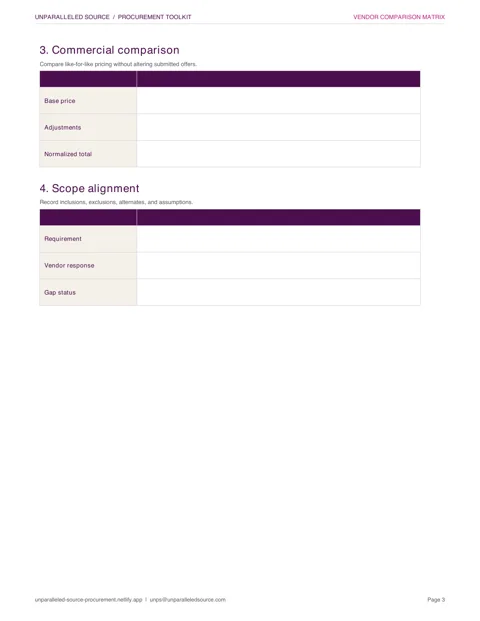
A fair comparison begins with the same requirement. Quantities, service periods, labor, freight, installation, support, taxes, alternates, and buyer responsibilities should be mapped before a lower total is treated as an advantage.

  • Preserve original proposals.
  • Align units and time periods.
  • Mark omissions instead of estimating silently.

Expose cost

Keep unresolved exposure beside the stated total.

Travel, implementation, replacement material, escalation, overage, renewal, downtime, and transition requirements can affect the practical cost of an offer. Where evidence is missing, the comparison should show an open question.

  • Separate known and conditional costs.
  • Label buyer-supplied assumptions.
  • Request supplier clarification.

Decide

Use evaluated cost as one part of the buyer record.

Evaluated cost supports a decision but does not replace review of capability, quality, schedule, service, risk, or contract terms. The buyer should approve the evaluation method before it is used to compare responses.

  • Document evaluation factors.
  • Retain the underlying evidence.
  • Keep approval authority explicit.

Evidence trail

Official sources

Use the current source and the requirements that apply to the specific purchase or opportunity.

Bring the record into view

Continue the decision

Use this guide to organize the next step, then bring the requirement, supplier field, quotes, or unresolved risk to the procurement desk.

Start a procurement review